Blog
Dividends vs Salary: What's the Most Tax-Efficient Way to Pay Yourself?
Dividends vs salary is the first real tax decision most new company directors face. Pay yourself too much salary and you hand over National Insurance you didn't need to pay. Take too little and you can waste your tax-free allowance.
Here's how the two are taxed in 2026/27, and the mix that usually works best for a one-director company.
By Rehan Razzaq FCCA · Published · 7 min read
The short answer
- Usually a mix: for most one-director companies in 2026/27, a £12,570 salary with the rest taken as dividends leaves the most in your pocket.
- Salary above £12,570 costs more, because you and the company both pay National Insurance on it as well as Income Tax.
- The answer changes if you have other income, staff on the payroll, or profit you can leave in the company.
How are salary and dividends taxed in 2026/27?
The figures below are for the 2026/27 tax year (6 April 2026 to 5 April 2027), using Income Tax rates for England, Wales and Northern Ireland. All were checked against GOV.UK on 8 October 2026.
Salary
- Income Tax: 0% up to the £12,570 Personal Allowance, 20% up to £50,270, 40% up to £125,140 and 45% above that.
- Employee's National Insurance: 8% on salary between £12,570 and £50,270, and 2% above that.
- Employer's National Insurance: the company pays 15% on salary above £5,000 (rates and thresholds for 2026/27).
- Corporation Tax relief: salary and employer's National Insurance are business costs, so they reduce the company's taxable profit.
Dividends
- Paid from taxed profit: the company pays Corporation Tax first, at 19% on profits up to £50,000, rising to 25% above £250,000, with marginal relief in between.
- No National Insurance for you or the company.
- Dividend tax: nothing on dividends covered by any unused Personal Allowance or the £500 dividend allowance. After that, 10.75% in the basic rate band, 35.75% in the higher rate band and 39.35% in the additional rate band.
If you live in Scotland, Scottish Income Tax bands apply to your salary but not to dividends, which are taxed at the same rates as the rest of the UK. A salary of £12,570 or less is within the Personal Allowance either way.
Why is £12,570 the usual director's salary?
Up to £12,570, salary is free of Income Tax and employee's National Insurance. The only cost is the company's 15% National Insurance on the slice above £5,000, which comes to £1,135.50 on a £12,570 salary.
That sounds like a reason to stop at £5,000, but it isn't. The extra salary and the National Insurance on it both reduce the company's Corporation Tax. Taking that same money as dividends would mean paying Corporation Tax on it first.
At 2026/27 rates, the £12,570 salary wins by about £460 a year in our illustration below.
A salary above £6,708, the Lower Earnings Limit, should also count towards your State Pension even though no National Insurance is paid on it, as GOV.UK's guide to National Insurance classes explains. A £5,000 salary falls below that limit.
The salary must still go through a payroll, with the company registered as an employer and reporting to HMRC each time you're paid.
Dividends vs salary: an illustrative comparison
The table compares what a sole director takes home under three ways of drawing the same profit. It is illustrative only, not a real client, and assumes:
- 2026/27 rates, England, no other income, no student loan and no pension contributions
- All profit is drawn out in the year, and the director is the only employee, so the company can't claim the Employment Allowance
- No associated companies, and a 12-month accounting period that matches the tax year
| Profit before paying yourself | All salary | £5,000 salary + dividends | £12,570 salary + dividends |
|---|---|---|---|
| £30,000 | £22,772 | £23,941 | £24,403 |
| £50,000 | £35,294 | £38,399 | £38,862 |
| £80,000 | £51,283 | £55,012 | £55,765 |
| £100,000 | £61,370 | £64,457 | £65,210 |
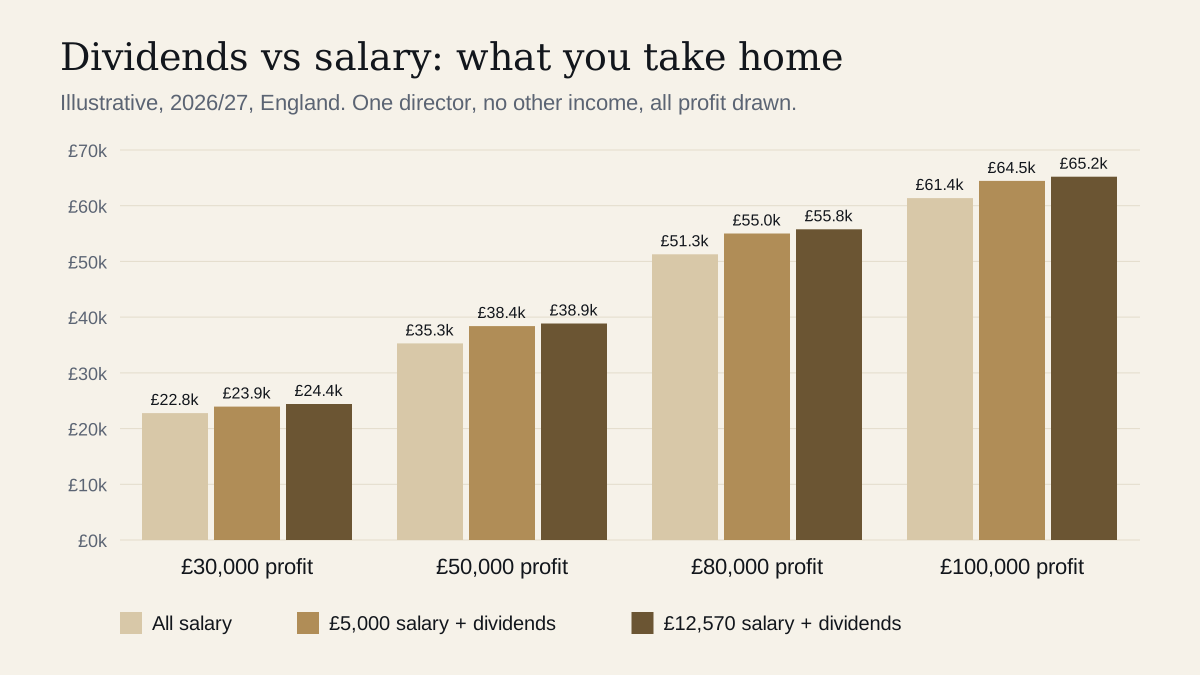
Taking everything as salary is the most expensive option at every level, by between about £1,600 and £4,500 a year. The £12,570 salary beats the £5,000 one at every level too, though by much less.
Should I take more salary once I'm earning more?
Usually not. Above £12,570, each extra pound of salary carries Income Tax, 8% employee's National Insurance and 15% employer's National Insurance. Dividends carry Corporation Tax and dividend tax, but no National Insurance.
For every £100 of company profit in the basic rate band, you keep about £62.61 as extra salary and £72.29 as a dividend.
Dividends also stay ahead in the higher rate band, because each extra pound of salary pushes a pound of dividends up into the 35.75% band.
One thing to watch: your Personal Allowance starts to shrink once your adjusted net income passes £100,000, and dividends count towards that figure.
When does the answer change?
- You have a job or a pension as well: if other income already uses your Personal Allowance, a £12,570 salary is no longer tax-free, and a lower salary can work out better.
- You have other staff: a company that can claim the £10,500 Employment Allowance may pay no employer's National Insurance on your salary at all.
- You don't need all the profit: profit left in the company has only paid Corporation Tax. Our sole trader vs limited company guide shows why that's where most of a company's tax advantage now comes from.
- Pension contributions: a company contribution to a registered pension is normally an allowable expense (HMRC's BIM46035). It counts towards your £60,000 annual allowance, but you can't spend it now.
What paperwork do dividends need?
Dividends can only come out of available profits from the current and earlier years. The directors must declare each dividend at a meeting and keep minutes, even if you're the only director. Each payment needs a dividend voucher.
The mistake we see most often is a director taking money out through the year and calling it dividends later. If the profits aren't there, or the paperwork wasn't done, that money is a director's loan, with its own tax consequences.
Dividends aren't taxed at source either. Once they go over your unused Personal Allowance and dividend allowance, you need to report them to HMRC, usually on a Self Assessment return.
So which is the most tax-efficient?
For a typical one-director company with no other income, a £12,570 salary plus dividends is the most tax-efficient way to draw profit in 2026/27. All salary is the most expensive route, and a £5,000 salary leaves a few hundred pounds on the table.
The mix is only half the decision, though. How much you draw, and when, matters as much as the split, and other income or a second employee can change the right salary.
How REYS Accountants can help
We're a small practice in Catford, SE6, and setting a director's pay for the year is one of the first things we do with new company clients. If you work for yourself through a company, see our page for freelancers and one-person limited companies.
We can run your director's payroll, your company's annual accounts and Corporation Tax and your personal Self Assessment return, so the salary, dividends and tax all line up. Get in touch and we'll work out your figures.
Frequently Asked Questions
For most one-director companies in 2026/27, a mix works best: a £12,570 salary, with the rest taken as dividends. Salary above £12,570 carries Income Tax and National Insurance for you and the company, which costs more than Corporation Tax plus dividend tax.
No. Dividends carry no National Insurance for you or the company. They are paid out of profit that has already paid Corporation Tax, and then taxed at the dividend rates of 10.75%, 35.75% or 39.35% once your Personal Allowance and the £500 dividend allowance are used.
Salary up to £12,570 is free of Income Tax and employee's National Insurance. The company pays 15% employer's National Insurance above £5,000, but the salary and that National Insurance both cut its Corporation Tax. At 2026/27 rates, that beats taking the same money as dividends.
No. A company must not pay out more in dividends than its available profits from the current and previous years. Money taken out without enough profit to cover it is treated as a director's loan, which has its own tax rules.
This article is general guidance for UK businesses and individuals and does not constitute personal tax advice. Figures and rules are as published on GOV.UK at 8 October 2026, and any examples are illustrative. Rates, thresholds and individual circumstances vary and can change, so always confirm your specific position with a qualified accountant or on GOV.UK before acting.

Not sure what to pay yourself?
Book a short call and we'll set out a salary and dividend plan for your own figures, no pressure, no obligation.
Book a short callPaying yourself