Blog
Sole Trader vs Limited Company: Which Is Right for Your UK Business?
Sole trader vs limited company is one of the first decisions a new business owner faces, and one of the most common questions we're asked. The usual answer, "go limited once you're making decent money", is out of date. Here's how the two compare on tax, risk and paperwork for the 2026/27 tax year.
By Rehan Razzaq FCCA · Published · 8 min read
What's the difference between a sole trader and a limited company?
As a sole trader, you and the business are legally the same thing. You keep all the profit, you pay Income Tax and National Insurance on it through Self Assessment, and you're personally responsible for the business's debts.
A limited company is a separate legal person. It's registered at Companies House, it pays Corporation Tax on its own profits, and you get money out as a director's salary, dividends or both. Your personal liability is normally limited to what you've put into the company.
How is each one taxed in 2026/27?
The figures below are for the 2026/27 tax year (6 April 2026 to 5 April 2027), using Income Tax rates for England, Wales and Northern Ireland. Scotland has its own Income Tax bands. They were checked on 24 September 2026 and will change in future years.
Sole trader
- Income Tax on your profit: 0% up to the £12,570 Personal Allowance, 20% up to £50,270, 40% up to £125,140 and 45% above that. The Personal Allowance is reduced by £1 for every £2 of income over £100,000.
- Class 4 National Insurance: 6% on profits between £12,570 and £50,270, and 2% above that. Class 2 is no longer compulsory.
Limited company
- Corporation Tax: 19% on profits up to £50,000 and 25% on profits over £250,000. In between, marginal relief applies, which works out at an effective 26.5% on each pound of profit between £50,000 and £250,000. Those limits are cut if the company has associated companies or a short accounting period.
- Dividend tax: the first £500 of dividends is tax-free. After that, 10.75% in the basic rate band, 35.75% in the higher rate band and 39.35% in the additional rate band. The basic and higher rates rose by 2 percentage points from 6 April 2026.
- National Insurance on a director's salary: employer's National Insurance at 15% above £5,000, and employee's at 8% above £12,570 (2% above £50,270). The £10,500 Employment Allowance isn't available to a company whose only employee is a single director.
You can check the current rates on gov.uk: Corporation Tax rates, tax on dividends and self-employed National Insurance.
Does a limited company save tax? An illustrative comparison
The example below compares take-home pay for a sole trader with a one-director limited company at four profit levels. It is illustrative only, not a real client, and uses these assumptions:
- 2026/27 rates, England, no other income, no student loan and no pension contributions
- The company pays the director a £12,570 salary and pays out everything left after Corporation Tax as dividends
- The company has no associated companies and a 12-month accounting period that lines up with the tax year
- Accountancy fees and other running costs are left out, even though they're usually higher for a company
| Profit before tax | Sole trader | Limited company | Sole trader ahead by |
|---|---|---|---|
| £30,000 | £25,468 | £24,403 | £1,065 |
| £50,000 | £40,268 | £38,862 | £1,406 |
| £80,000 | £57,711 | £55,765 | £1,946 |
| £100,000 | £69,311 | £65,210 | £4,101 |
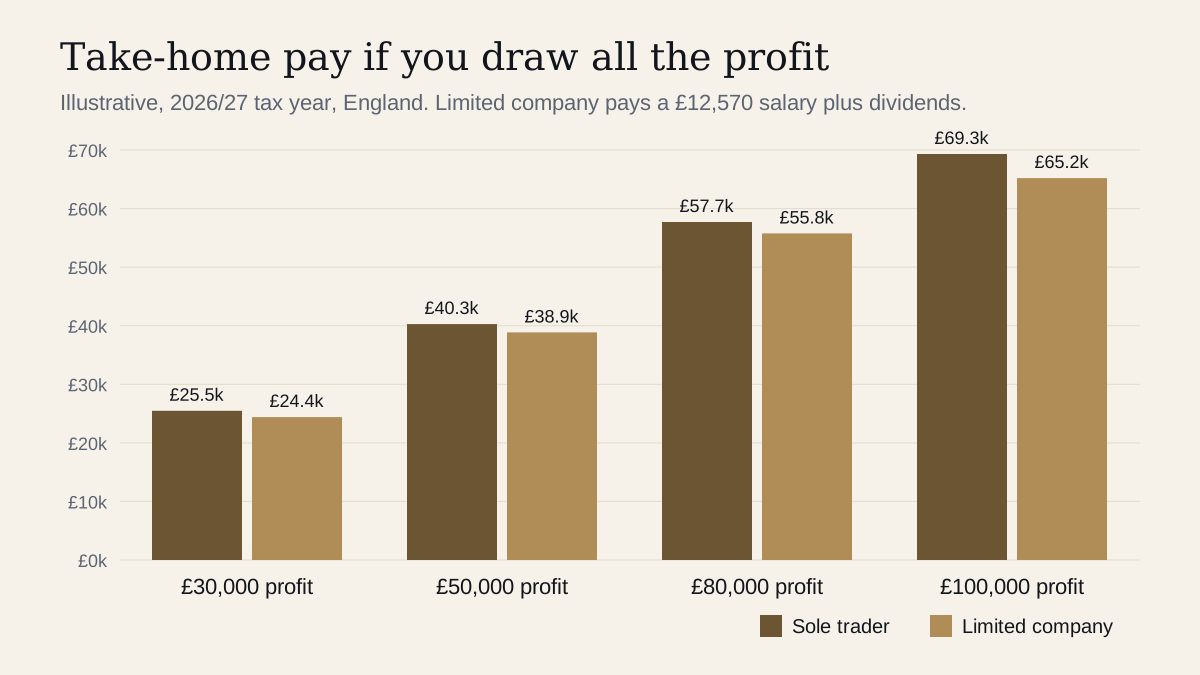
That surprises a lot of people. Since Class 4 National Insurance fell to 6% in April 2024, and dividend tax went up in April 2026, a company no longer saves tax if you take all the profit out every year. In the basic rate band, a sole trader pays 26% (20% Income Tax plus 6% National Insurance) on each extra pound of profit. A company pays 19% Corporation Tax and then 10.75% dividend tax on what's left, which is about 27.7%. In the higher rate band the gap is wider.
When does a limited company start to pay?
The tax case for a limited company now rests mainly on profit you don't need to spend. Profit left in the company has only paid Corporation Tax, at 19% or 26.5%, rather than 42% as a higher rate sole trader.
Take the same illustrative £80,000 of profit. If the director draws only enough to stay within the basic rate band (a £12,570 salary plus £37,700 of dividends), the total tax paid this year is about £18,950, against £22,289 as a sole trader. But £14,776 stays in the company, and it will be taxed again as a dividend when it comes out. The saving is real only if you can leave that money in for years, draw it in a lower-income year, or put it into a pension through the company.
As a rough guide, and only a guide, incorporation starts to be worth looking at when your profits are regularly above the higher rate threshold of £50,270 and you can live on less than you earn. Below that, the case for a company is rarely about tax.
What matters apart from tax?
- Limited liability: your personal assets are usually protected if the business fails. Banks and landlords often ask directors for personal guarantees, which cuts into that protection.
- Clients and contracts: some larger clients and agencies will only work with limited companies. Contractors working through their own company also need to think about IR35.
- Paperwork: a company files annual accounts at Companies House, a Corporation Tax return, a confirmation statement and payroll submissions, and most directors still file a personal Self Assessment return. A sole trader files one Self Assessment return, though Making Tax Digital for Income Tax now applies to sole traders with qualifying income over £50,000, and drops to £30,000 from April 2027.
- Privacy: a company's accounts and its directors' names are on the public Companies House register, and directors now have to verify their identity with Companies House.
- Company money is not your money: company funds belong to the company. Taking cash out without it being salary, dividends or a properly recorded loan creates tax problems.
Which should you choose?
A sole trader set-up is usually the better starting point if you're testing an idea, your profits are within the basic rate band, or you need most of what you earn to live on. It's cheaper, simpler and, at 2026/27 rates, often no worse for tax.
A limited company is usually worth it if you're a higher rate taxpayer who can leave profit in the business, you need limited liability for the risk you're taking on, your clients require it, or you're bringing in co-founders or investors. You can start as a sole trader and incorporate later, but moving an existing business across can have Capital Gains Tax and other consequences, so plan it rather than doing it in a hurry.
How REYS Accountants can help
We'd rather run your actual numbers than give you a rule of thumb. If you're a freelancer weighing it up, see our page for freelancers and one-person limited companies. If you've decided to incorporate, we can handle setting up a new limited company and then its annual accounts and Corporation Tax and director's payroll. Staying a sole trader? Our Self Assessment service covers you. Get in touch and we'll talk it through.
Frequently Asked Questions
No. At 2026/27 rates, if you draw out all of the profit each year, a one-director company usually pays slightly more tax than a sole trader at the same profit. The saving comes mainly from leaving profit in the company, where it has only paid Corporation Tax.
On salary, yes. For 2026/27 the company pays employer's National Insurance at 15% on salary above £5,000, and the director pays employee's National Insurance at 8% on salary above £12,570. Dividends carry no National Insurance, but they are taxed at the dividend rates.
Usually, yes, because the company is responsible for its own debts. The protection is weaker if you sign personal guarantees for loans or leases, and directors can be personally liable for wrongful trading or for taking money out improperly.
Generally, yes. A company has more filings each year, including annual accounts, a Corporation Tax return, a confirmation statement and payroll, so accountancy fees are normally higher than for a sole trader. Those costs belong in the comparison alongside the tax.
This article is general guidance for UK businesses and individuals and does not constitute personal financial or tax advice. Figures are for the 2026/27 tax year as at 24 September 2026, and worked examples are illustrative. Rates, thresholds and individual circumstances vary and can change, always confirm your specific position with a qualified accountant or on gov.uk before acting.
Not sure which suits you?
Book a short call and we'll run your own figures both ways, no pressure, no obligation.
Book a short callSole trader or company