Blog
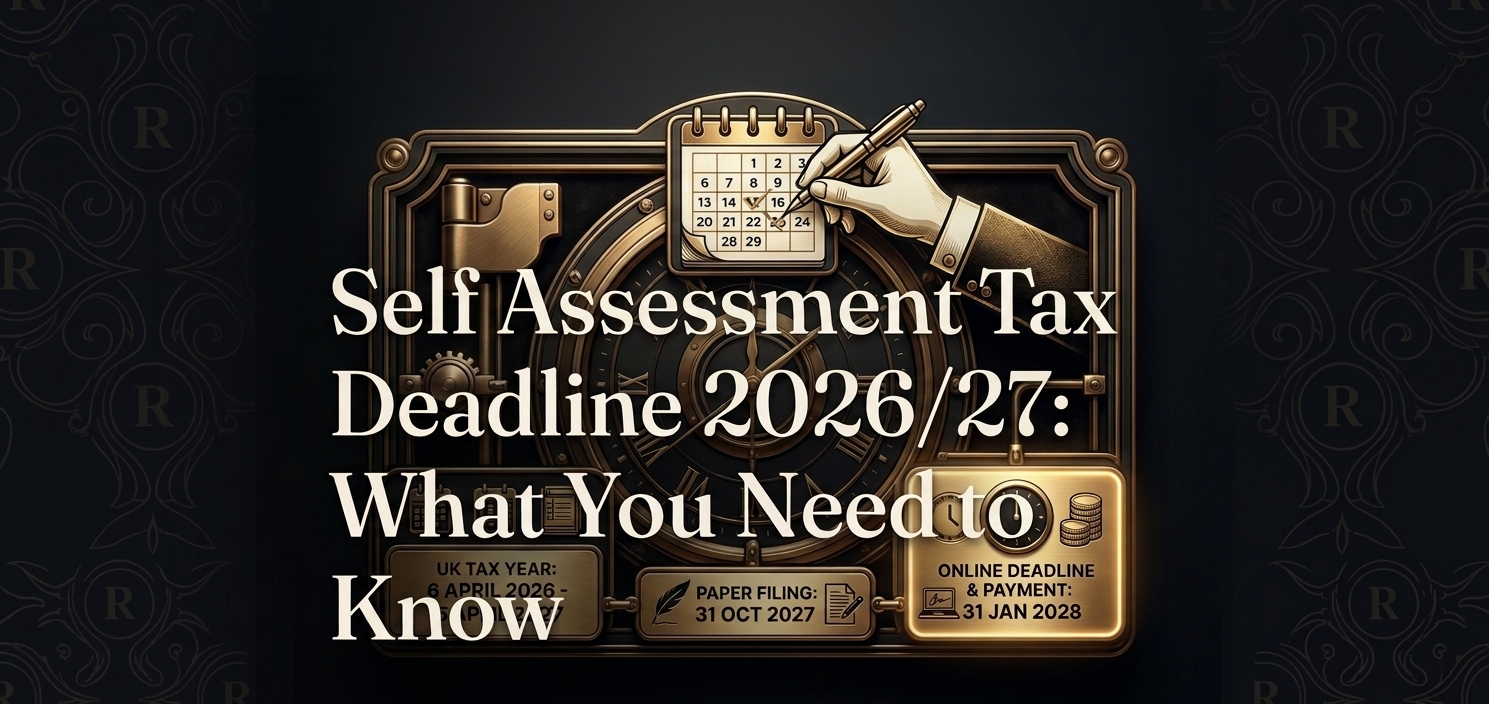
Self Assessment Tax Return Deadline 2026/27: What You Need to Know
If you're a sole trader, landlord, or company director, the Self Assessment deadline that's coming up is for the 2025/26 tax year, and it's due by 31 January 2027. Here's exactly what that covers, what happens if you miss it, and how to get ahead of it now instead of in January.
Published 15 September 2026 · 6 min read
Which tax year does this deadline actually cover
This is the part that trips almost everyone up. When people talk about "the 2026/27 deadline," they usually mean the deadline that falls within that period, not a return for a tax year that hasn't happened yet. The return actually due by 31 January 2027 covers the 2025/26 tax year, 6 April 2025 to 5 April 2026, the income and expenses from that period, not the current one.
So if you're reading this now, the return you need to be thinking about is for the year that's just ended or is about to, not the one you're currently trading through. Getting this distinction right matters, because it changes which records you actually need to pull together.
Key dates for the 2025/26 tax year
- 5 October 2026 — register for Self Assessment if you started self-employment or began renting out a property during 2025/26 and haven't registered before
- 31 October 2026 — deadline for paper tax returns
- 31 January 2027 — deadline for online tax returns
- 31 January 2027 — deadline to pay any tax owed, plus your first payment on account for 2026/27 if one applies
- 31 July 2027 — deadline for your second payment on account, if applicable
Most people file online rather than on paper, since it gives you three extra months. HMRC's own guidance has the full list of who needs to file at all, if you're not sure this applies to you.
What happens if you miss the deadline
HMRC's penalties for a late Self Assessment return escalate quickly, and they apply even if you don't actually owe any tax:
- 1 day late — an automatic £100 penalty
- 3 months late — daily penalties of £10, up to a maximum of £900
- 6 months late — a further penalty of 5% of the tax owed or £300, whichever is higher
- 12 months late — another 5% or £300 penalty, and in serious cases even more
On top of that, HMRC charges interest on any tax paid late, separately from the penalties above. It's one of the more avoidable costs out there, almost every late filing comes down to disorganised records rather than a genuinely complicated tax position.
How to be ready before January, not in it
The businesses that find January stressful are almost always the ones trying to reconstruct a year of records in the first three weeks of the month. A few things make a real difference if you do them now instead:
- Pull together bank statements, invoices and receipts for the full 2025/26 tax year while it's still recent
- Check whether you've registered for Self Assessment yet, if 2025/26 was your first year of self-employment or rental income
- Work out roughly what you'll owe early, so a payment on account for 2026/27 doesn't land as a surprise alongside your balancing payment
- If your records are already a mess, our bookkeeping service can get them sorted before it becomes a filing problem
How REYS Accountants can help
Our Self Assessment service covers exactly this: preparing and filing your return, working out what you owe well ahead of the 31 January deadline, and explaining the number in plain English before anything goes to HMRC. If you're not sure whether you even need to file for 2025/26, or you're behind on registering, get in touch and we'll tell you straight where you stand.
The deadline itself isn't complicated, it's the same handful of dates every year. What actually causes problems is leaving the records until the deadline is close, rather than the filing itself.
Frequently Asked Questions
31 October 2026 if you file a paper return, or 31 January 2027 if you file online. Any tax you owe for the year is also due by 31 January 2027, along with your first payment on account for the following year if one applies.
HMRC issues an automatic £100 penalty the day after the deadline, even if you don't owe any tax. After 3 months, daily penalties of £10 can apply up to a further £900, and further penalties follow at 6 and 12 months, on top of interest on any tax paid late.
By 5 October following the end of the tax year you need to file for. If you started self-employment or began renting out a property during the 2025/26 tax year, you need to register with HMRC by 5 October 2026.
It's better to file with a reasonable estimate and amend it later than to miss the deadline entirely, HMRC allows amendments after filing. Getting your records organised early is the real fix, get in touch and we can help you sort them before January.
This article is general guidance for UK businesses and individuals and does not constitute personal financial or tax advice. Rules, thresholds and individual circumstances vary, always confirm your specific position with a qualified accountant before acting.
Behind on your records already?
Book a short call and we'll tell you exactly what's needed before January, no pressure, no obligation.
Book a short callDeadline: 31 January 2027