Blog
When Do I Need to Register for VAT in 2026?
When do I need to register for VAT? In 2026 the short answer is: when your VAT taxable turnover goes over £90,000 in any rolling 12-month period, or when you expect it to go over £90,000 in the next 30 days alone.
You then have a fixed window to tell HMRC. Here's how the tests work, the dates that matter and what it costs to get it wrong.
By Rehan Razzaq FCCA · Published · 7 min read
The short answer
- Threshold: £90,000 of VAT taxable turnover. It has been £90,000 since 1 April 2024.
- 12-month test: check at the end of every month. If your taxable turnover for the last 12 months is over £90,000, tell HMRC within 30 days of the end of that month.
- 30-day test: if you expect your taxable turnover in the next 30 days alone to go over £90,000, register by the end of that 30-day period.
- Late registration: you owe VAT on your sales from the date you should have been registered, whether or not you charged it, and HMRC can add a penalty.
- Below £90,000: registering is optional. It can pay if your customers are VAT-registered businesses.
All figures in this article were checked against GOV.UK on 1 October 2026.
What is the VAT registration threshold in 2026?
The VAT registration threshold is £90,000. It rose from £85,000 on 1 April 2024, after being frozen at £85,000 for seven years. The deregistration threshold, the level you'd need to fall below before you can cancel, is £88,000.
Neither figure changed in the Autumn Budget 2025, and HMRC's VAT registration guidance still gives £90,000 as the current threshold.
The threshold doesn't move automatically each April, so check the current VAT thresholds on GOV.UK rather than a figure you remember.
The threshold is the same whether you're a sole trader, a partnership or a limited company. For a sole trader, it's the person who registers, so turnover from every business you run in your own name counts towards the same £90,000.
What counts as taxable turnover?
The threshold is measured on turnover, not profit: £95,000 of sales with £20,000 of profit is over it. HMRC defines taxable turnover as everything you sell that isn't VAT exempt or outside the scope of VAT.
What's included
- Standard-rated (20%), reduced-rated (5%) and zero-rated (0%) sales. Zero-rated sales, such as most food and children's clothes, still count.
- Goods you hire or lend to customers, and business goods you use personally
- Items you barter, part-exchange or give away as gifts
- Services you buy from overseas businesses that you have to reverse charge
What's left out
- VAT exempt sales, such as most insurance, finance and residential rent
- Sales that are outside the scope of VAT
- Sales of your capital assets, such as equipment or a vehicle the business used
HMRC's full list is in how to calculate your taxable turnover. If you only make exempt sales, you can't register at all, whatever your turnover.
How do the two VAT registration tests work?
The 12-month test (looking back)
At the end of every month, add up your taxable turnover for the previous 12 months. This is a rolling 12 months, not your tax year or your accounting year, which is where most people get caught out.
If the total is over £90,000, you must tell HMRC within 30 days of the end of that month. You're registered from the first day of the second month after you went over.
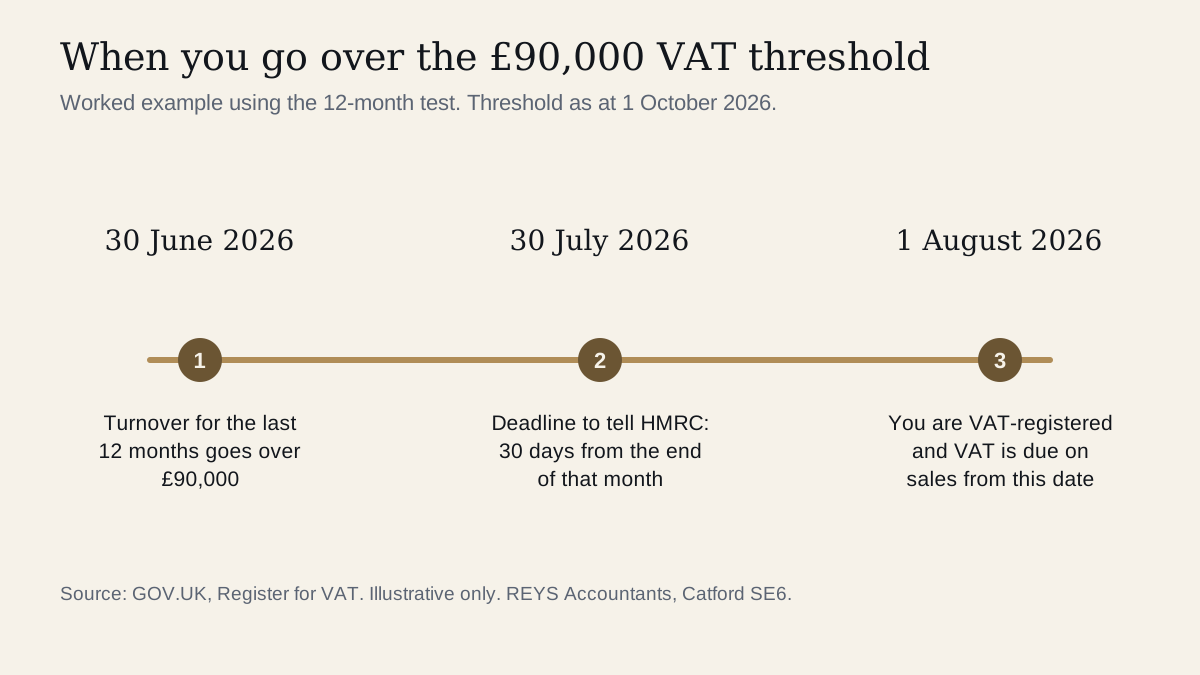
Example: at the end of June 2026, your taxable turnover for the 12 months to 30 June is £91,500. That's the first time it has gone over £90,000. You must register by 30 July 2026, and you're VAT-registered from 1 August 2026.
The 30-day test (looking forward)
This one catches businesses that land a large contract.
If at any point you expect your taxable turnover in the next 30 days alone to go over £90,000, you must register by the end of that 30-day period. Your registration starts from the date you realised, not the date the money arrives.
Example: on 2 November 2026 you agree a £95,000 contract that will be paid within the month. You must apply by 1 December 2026, and you're VAT-registered from 2 November 2026.
Both tests and the dates come from HMRC's guide to when you must register for VAT.
What happens if you register for VAT late?
- You owe the VAT anyway. HMRC will register you from the date you should have been registered, and VAT is due on your taxable sales from then, even though you didn't charge it. If you can't go back to your customers for it, it comes out of your own margin.
- A failure to notify penalty. This is a percentage of the VAT owed. For a careless mistake it's up to 30%, and it can be reduced to nothing if you tell HMRC yourself within 12 months of the tax being due. Deliberate failures can reach 70%, and 100% if they were concealed. There's no penalty if you have a reasonable excuse.
The penalty ranges are set out in HMRC's factsheet on penalties for failure to notify. If you think you've already gone over, the cheapest option is almost always to tell HMRC now rather than wait to be asked.
What if you only go over the threshold temporarily?
If a one-off sale pushes you over £90,000 but turnover will drop back, you can ask HMRC for an exception from registration. You have to show that your taxable turnover in the next 12 months won't go over £88,000, the deregistration threshold.
HMRC decides, and until it agrees, assume you need to register.
Businesses whose sales are mostly zero-rated can also ask HMRC for an exemption from registering.
Should you register for VAT voluntarily below £90,000?
You can register at any turnover. Whether you should depends mostly on who your customers are.
- It often makes sense if you sell mainly to VAT-registered businesses. They reclaim the VAT you charge, so your prices don't effectively go up, and you can reclaim VAT on your own costs.
- It rarely makes sense if you sell to the public. You either add 20% to your prices or absorb it, and your customers can't reclaim it.
- Costs before you register: once registered, you can usually reclaim VAT on goods bought up to 4 years before registration that you still have, and on services received up to 6 months before.
Registering also means quarterly returns, so weigh the admin against the VAT you'd recover.
What changes once you're VAT-registered?
- Charging VAT: most sales are at the 20% standard rate, some at 5% or 0%. You can't show VAT on invoices until you have your VAT number, but you can raise your prices in the meantime to cover it.
- Returns: you usually file a VAT return every three months, due one calendar month and seven days after the end of the period.
- Making Tax Digital: HMRC signs every newly registered business up to Making Tax Digital for VAT, so your records and returns go through compatible software.
- Schemes: the Flat Rate Scheme is open if your taxable turnover is £150,000 or less, and Cash Accounting if it's £1.35 million or less.
See HMRC's pages on VAT rates and submitting a VAT return.
How to stay ahead of the VAT threshold
Businesses that go over without noticing are usually growing fast and watching their annual accounts, which come too late to show a rolling 12-month total. Three habits fix it:
- Keep your bookkeeping up to date monthly, so the rolling total is always one report away
- Set an early warning, say at £80,000, so you have time to plan prices and systems
- Check the 30-day test before you sign any single large contract
The bottom line
You need to register for VAT once your taxable turnover passes £90,000 over any rolling 12 months, or will pass it in the next 30 days alone. Check the figure every month, act within 30 days, and get advice early if you're close.
How REYS Accountants can help
We're a small practice in Catford, SE6, and VAT registration questions are some of the most common we get from local businesses.
Our VAT returns service covers working out whether and when you need to register, doing the registration and filing every return after it, and our bookkeeping service keeps the rolling 12-month figure in view.
Running a shop or cafe? Our page on bookkeeping and VAT for Lewisham businesses covers the retail and food rules.
Builders should read about the domestic reverse charge on building work, and if you're starting a company, see setting up a new limited company. Not sure where you stand? Get in touch.
Frequently Asked Questions
Turnover. The £90,000 threshold is measured on your VAT taxable sales over the last 12 months, before any costs are taken off. Exempt and out-of-scope sales, and sales of capital assets, are left out.
No. The registration threshold has been £90,000 since 1 April 2024, and the deregistration threshold £88,000. Both were unchanged at 1 October 2026.
No. It's a rolling 12 months that you check at the end of every month. A business can be under £90,000 for its accounting year and still go over the threshold partway through it.
You can't show VAT on your invoices until HMRC gives you a VAT registration number. You can raise your prices to cover the VAT you'll owe from your registration date.
You pay the VAT due from the date you should have registered, plus a possible failure to notify penalty. For a careless mistake that's up to 30% of the VAT owed, reduced to as little as nothing if you tell HMRC yourself within 12 months. Deliberate failures can reach 100%.
This article is general guidance for UK businesses and does not constitute personal tax advice. Figures and rules are as published on GOV.UK at 1 October 2026, and the examples are illustrative. Thresholds and individual circumstances vary and can change, always confirm your specific position with a qualified accountant or on gov.uk before acting.
Close to £90,000?
Book a short call and we'll check your rolling 12-month figure and tell you when you need to register, no pressure, no obligation.
Book a short call